













rad popa
Maintenance contract - Required documents, notary fees and obligations
The maintenance contract is that contract by which one party undertakes to perform for the benefit of the other party or a certain third party the services necessary for maintenance and care for a certain period of time. This bilateral legal act involves the transmission of a capital, represented by one or more movable or immovable assets or a sum of money, by the maintained person to the maintainer, who in return undertakes to ensure daily maintenance for the entire life or for a certain period of time.
The legal nature of the contract is characterized by several distinctive elements. The contract is consensual, bilateral, random, intuitu personae and with successive execution for one of the parties. The random character arises from the uncertainty regarding the duration of the obligations of both parties, especially when the duration of the maintenance is not predetermined. The obligations being reciprocal and interdependent, the contract falls into the category of bilateral synallagmatic acts.
The contracting parties are called the maintainer and the maintainer, although the New Civil Code avoids explicitly naming them as such. The maintainer represents the creditor of the maintenance obligation, and the maintainer is the debtor of this obligation. Both parties must have full capacity to exercise, as the contract is of a solemn nature.
The main characteristic of the contract is its object, namely the maintenance and care of a person, which includes food, clothing, housing, medical care and other necessary benefits. The maintenance debtor owes the creditor benefits determined in an equitable manner, taking into account the value of the capital and the previous social condition of the creditor.
The form of the contract is strictly regulated. According to art. 2255 of the Civil Code, the maintenance contract is concluded in authentic form at the notary, under penalty of absolute nullity. The legal regulation of the contract is found in the Civil Code, Book V, Title IX "On special contracts", Chapter XVIII, art. 2254-2263.
Regarding the duration, if the contract does not stipulate the duration of the maintenance or only stipulates its lifelong nature, the maintenance is due for the entire life of the maintenance creditor. The contract may also be concluded in favor of a third party beneficiary, and the maintenance may be established in favor of one person or two or more persons.
Although the maintenance contract has similarities with the life annuity, recognized by the New Civil Code, the two contracts are not confused. Thus, although the rules of the life annuity are partially applied to it, maintenance remains an independent and distinct contract.
Documents required for the maintenance contract

The conclusion of this notarial deed requires the presentation of a complete set of documents certifying the identity of the parties, the ownership and the fiscal situation of the transferred asset.
Identity documents of the parties
Romanian citizens present their original ID card or passport. Citizens of the European Union, the European Economic Area or the Swiss Confederation provide their permanent residence card or registration certificate issued by the Romanian authorities, as well as their passport or identity card issued by the state of which they are a citizen.
For foreign citizens from non-EU/EEA countries, the mandatory documents include the passport and the residence permit issued by the Romanian authorities. In the event that foreign citizens have not been assigned a personal numerical code by the Romanian authorities, they will present the fiscal identification number assigned by the fiscal body. Also, the marriage certificate and matrimonial agreements are presented where the parties have concluded such agreements.
Property ownership deed
The property right of the dependent is proven through various legal documents. The title of ownership can be represented by the sale-purchase contract, the donation contract, the exchange contract, the deed of payment or the handover-reception report.
In the case of acquisition by inheritance, the heir certificate is presented together with the property documents from the legal history of the property. Final and irrevocable court decisions, decisions or provisions approving the restitution in kind of a property pursuant to law 10/2001 constitute valid titles.
For new constructions, the building permit together with the building acceptance report and the building construction certificate form the necessary documentation. The building registration certificate must be attached.
Tax certificate and cadastral documentation
The tax attestation certificate is issued by the Local Taxes and Taxes Directorate with territorial jurisdiction and is valid for 30 calendar days from the date of issue. The document certifies that the owner is up to date with payments to the local budget for the respective property.
In the event of the alienation of a property in co-ownership, the fiscal body issues certificates for each co-owner, proportional to the share of undivided property held. The cadastral documentation, drawn up by an authorized cadastral expert and endorsed by the competent Cadastre and Real Estate Advertising Office, includes the location plan and delimitation of the property, respectively the survey plan.
Extract from the land certificate
The land registry extract for authentication is obtained exclusively through the notary office, at the request of the owner, and is valid for 10 working days from the date of registration of the request. This document proves the current legal situation of the property and the rights registered on it.
Certificate from the homeowners association
For apartments located in blocks of flats or residential complexes where there is an established association, the certificate must be presented in original, with the handwritten signature of the administrator and the president of the association, specifying their first and last names and the stamp of the association.
The document has a registration number and date of issue, and is valid for 30 calendar days. The certificate certifies the up-to-date payment of the contribution quotas to the association's expenses or, as the case may be, mentions the exact amount of existing debts. In the event of the existence of debts, the alienation can only be carried out if the acquirer expressly declares in the contract that he takes over the entire payment obligations to the association.
Real estate ads recommended by STARTIMOB

EUR 79,999
New offer
exclusiveness
0% commission

EUR 51,999
New offer
exclusiveness
0% commission
Sacelle
EUR 500
New offer
exclusiveness
50% commission
EUR 124,999
New offer
exclusiveness
0% commission
EUR 380
New offer
exclusiveness
50% commission
EUR 84,999
New offer
exclusiveness
0% commission
Brasov
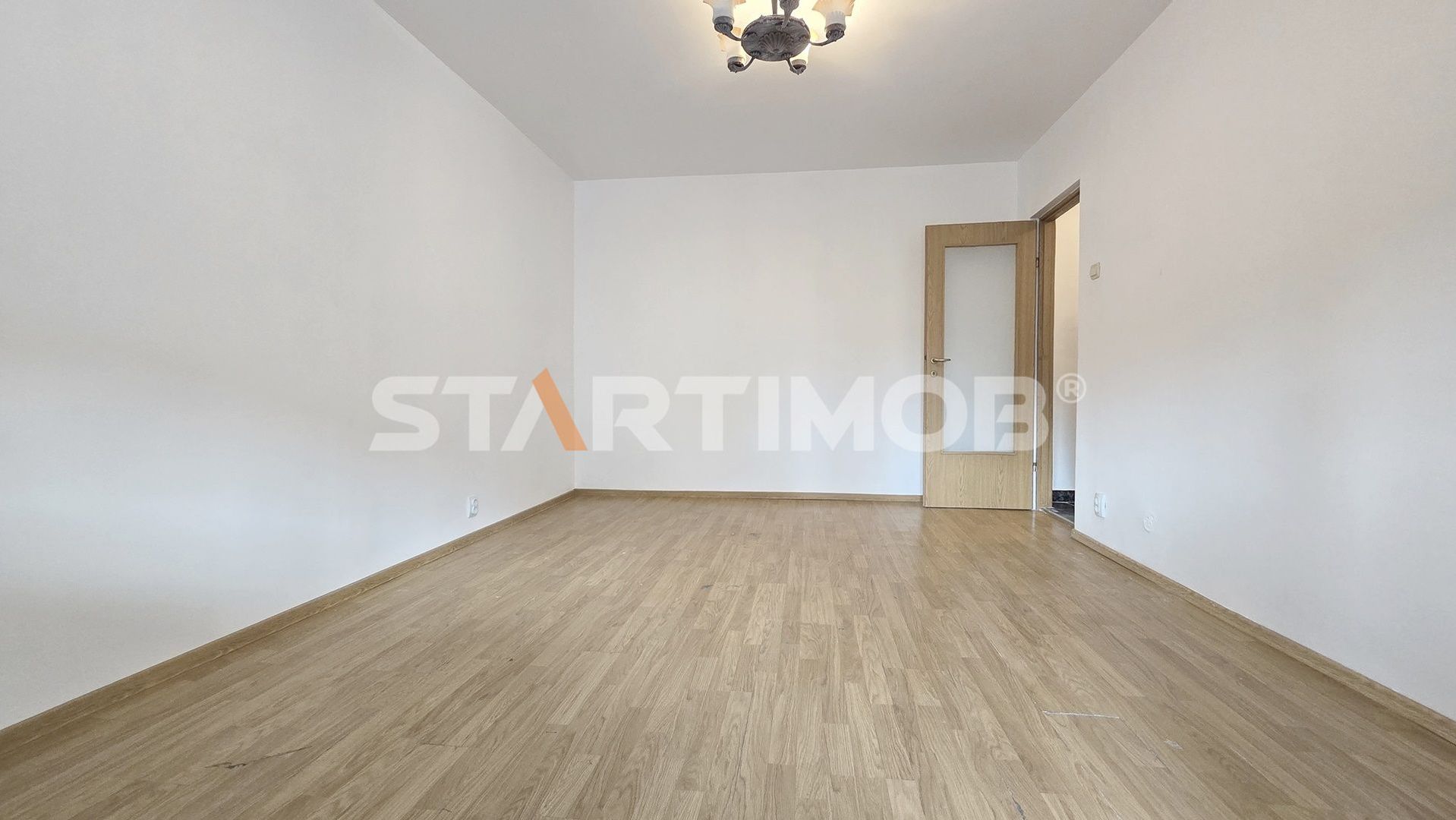
EUR 122,000
New offer
0% commission
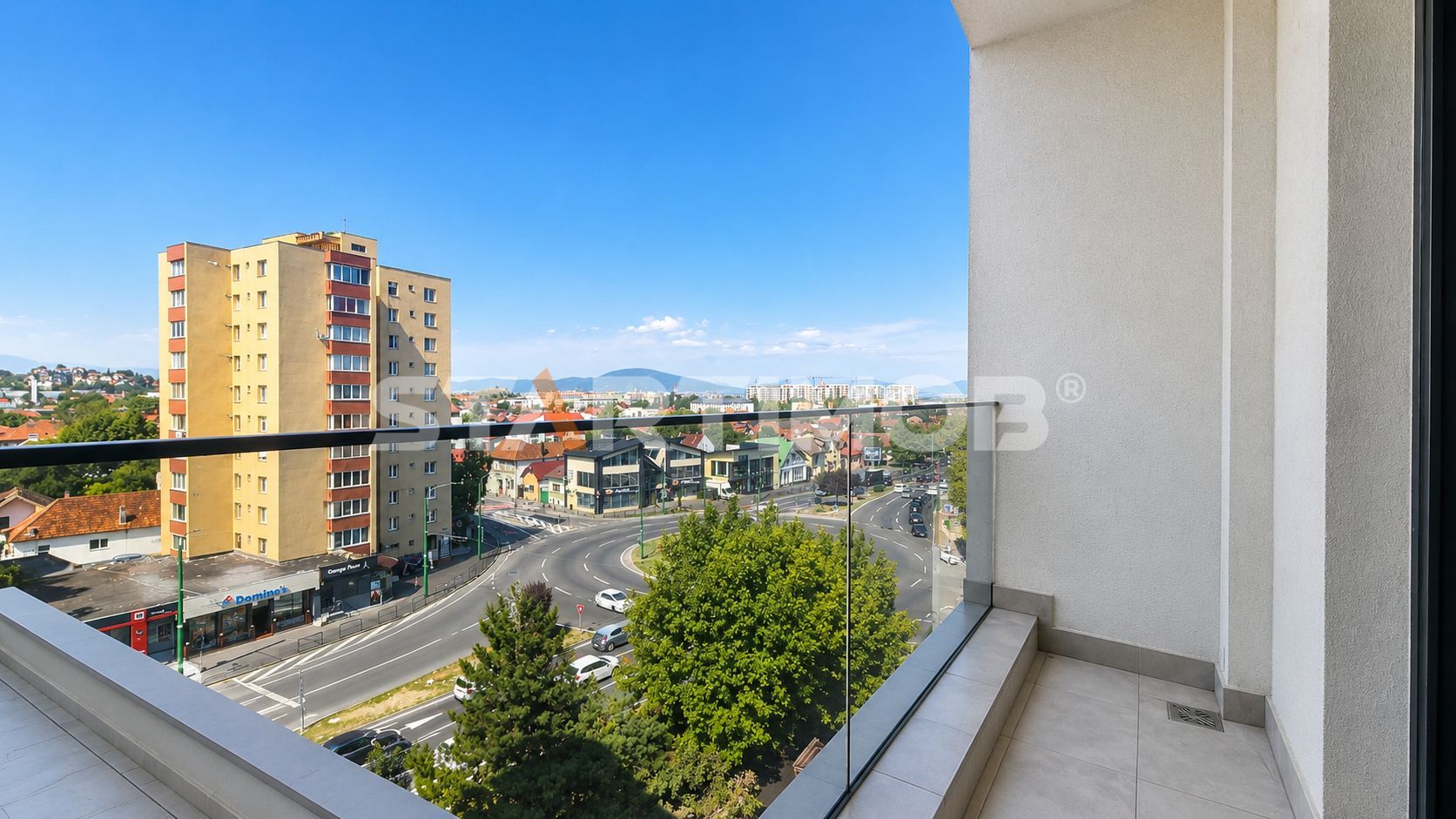
EUR 800
New offer
50% commission
Notary fees for the maintenance contract

The financial costs associated with authentication consist of the notary fee, the fees charged by the National Agency for Cadastre and Real Estate Advertising and the tax on the income generated from the transfer of property. The calculation of these fees varies depending on the value of the property transferred and the type of maintenance, with or without life usufruct.
The notary fee is established by applying differentiated percentage rates per tranche of the value of the property. For goods with a value of up to 20.000 lei, 2,2% is applied, but not less than 230 lei. In the case of values between 20.001 and 35.000 lei, the fee is 440 lei plus 1,9% for the amount exceeding 20.001 lei. The tranche of 35.001 to 65.000 lei attracts a fee of 725 lei plus 1,6% for the amount exceeding 35.001 lei.
For properties valued between 65.001 and 100.000 lei, 1.205 lei plus 1,5% is charged for the amount exceeding 65.001 lei. In the range of 100.001-200.000 lei, the fee is 1.705 lei plus 1,1% for the amount exceeding 100.001 lei. Properties valued between 200.001 and 600.000 lei generate a fee of 2.805 lei plus 0,9% for the amount exceeding 200.001 lei. For values over 600.001 lei, 6.405 lei plus 0,6% is calculated for the amount exceeding 600.001 lei.
The notary requests the parties to declare the real value of the goods, having the right to refuse authentication through a reasoned conclusion if he has doubts regarding the sincerity of the declared value. When the declared value is lower than the notarial expertise for the current year, the fee is set at the latter value.
The fees to the National Agency for Cadastre and Real Estate Advertising include the land registry extract for authentication, which costs 40 RON in normal mode (issued in two days) or 200 RON in emergency mode (issued in one day). The tabulation fee is 0,15% of the value of the property for individuals and 0,5% for legal entities.
The tax on income from the transfer of property is differentiated depending on the duration of ownership of the property. For goods acquired within a period of up to 3 years inclusive, 3% is applied up to a value of 200.000 lei inclusive, respectively 6.000 lei plus 2% calculated on the value exceeding 200.000 lei. If the property is owned for more than 3 years, the tax is 2% up to 200.000 lei inclusive or 4.000 lei plus 1% calculated on the value exceeding 200.000 lei.
Obligations of the parties in the maintenance contract

The bilateral legal relationship established by this contract generates reciprocal obligations for both parties, regulated by the Civil Code through the provisions of art. 2.256 and 2.257. The synallagmatic nature of this act requires compliance with certain legal and conventional obligations, established by the contractual clauses following the declaration of the intention to contract.
Maintenance obligations
The maintenance creditor has the main obligation to transfer the ownership right or another patrimonial right over the asset constituting the capital of the contract. The transfer is made at the time of conclusion of the contract or on the date of its registration in the land register. In order to ensure the execution of the maintenance obligations, the creditor may guarantee them by means of a privilege or mortgage over the transferred asset.
The obligation to hand over the property occurs upon conclusion of the contract or subsequently, depending on the stipulations of the parties. Until the moment of handover, the maintenance creditor must preserve the property and maintain it in proper condition. Similar to a seller, the maintenance creditor guarantees the acquirer against eviction and hidden defects of the transferred property.
The clause by which the maintenance creditor undertakes to provide services is considered unwritten. The maintenance recipient may transfer only movable or immovable property, without committing to the performance of any services in favor of the maintenance creditor.
The maintainer's obligations
The maintenance debtor owes the creditor benefits determined in an equitable manner, taking into account the value of the capital and the previous social condition of the creditor. The main obligation consists in ensuring maintenance in kind, which includes food, clothing, footwear, housekeeping, as well as the use of appropriate housing. Maintenance also includes care and expenses necessary in the event of illness.
If the maintenance is for life or the creditor dies during the term of the contract, the debtor is obliged to bury him. Maintenance continues to be owed to the same extent even if the asset that constituted the capital has been totally or partially destroyed or has diminished in value, for a cause for which the creditor of the maintenance is not liable.
In the absence of a contrary stipulation, the maintenance obligation is indivisible both with regard to creditors and debtors. The modalities of the execution of the obligations are stipulated by the parties at the time of concluding the contract, based on the principle of contractual freedom.
Maintenance contract template

The standard form of this act contains mandatory structural elements that ensure the legal validity of the agreement between the parties. First of all, the section on the contracting parties identifies the maintenance recipient and the maintenance provider through complete identification data, including name, surname, domicile, series and number of the identity card, personal identification number, as well as filiation. The maintenance recipient is the creditor of the obligation, and the maintenance provider becomes the debtor of this obligation.
The object of the contract specifies the goods transferred, whether movable or immovable, and specifies the services that will be provided in return. The description of the property includes the full address, number of rooms and cadastral identification data to ensure the transparency of the transaction.
The chapter dedicated to obligations specifies the commitments of each party. The maintenance party undertakes to transfer the assets and to guarantee that they are not encumbered by charges or easements, ensuring protection against eviction according to art. 1337 of the Civil Code.
The maintainer accepts the provision of maintenance and undertakes to ensure the procurement and preparation of food, the purchase of clothing, footwear, linen, medicines, medical care, cleaning the home and paying for electricity, water, sewer and fuel consumption.
The duration of the contract can be established for a fixed or unlimited term, being adaptable to the needs of the parties. Final clauses regulate the modification of the contract by additional act, excluding previous or subsequent verbal agreements. The notary office offers various variants such as the model with the reservation of the right of life usufruct for an apartment or land and a house.
Maintenance contract template
Between the undersigned:
1................, domiciled in............, CNP..........., (C) as the originator and creditor of the maintenance obligation,
2. ..............., domiciled in.............., CNP..........,(B) as beneficiary of the maintenance obligation and
3. ..............., domiciled in................., CNP............., (D) as debtor of the maintenance obligation,
In accordance with the provisions of art. 2257 et seq. of the Civil Code, this maintenance contract has been entered into, under the following conditions:
The undersigned (C), convey to (D), bare ownership of the property located in .............., with cadastral number..............., registered in the Land Registry no. ......., of the locality ..........., by decision no......... issued by the Cadastral and Real Estate Advertising Office ..............in exchange for the latter's assumption of the obligation to support me and my wife (B), throughout our lives, this obligation to cease on the date of the death of the last of us, in accordance with the provisions of art. 2244 of the Civil Code.
The undersigned (C) reserves to me the right of life usufruct over the property. The undersigned (C) also establishes, free of charge, in favor of my wife (B), both a right of life usufruct over the property and the right to benefit from life maintenance from the debtor (D).
The undersigned founder declares that I acquired the property as follows:............(the ownership documents will be mentioned).
The property has paid all taxes and duties, as shown in the tax certificate no.…….. dated …. issued by …..
The property is not encumbered by any encumbrances and no real rights have been established in favor of other persons, as shown by the Land Registry extract for authentication no. …… dated …., issued by the Real Estate Cadastre and Advertising Office ........
The undersigned (D), undertakes, in exchange for the bare property, which was transferred to me by (C), for consideration, to provide maintenance both for the benefit of the creditor (C) and for the benefit of his wife (B).
The undersigned (B), accept the establishment in my favor, by my husband (C), free of charge, of the life usufruct over the property described above and the right to benefit from the maintenance that will be provided to me throughout my life by the debtor (D).
We, (C), (B) and (D) understand that the obligation of maintenance and care assumed by (D) towards the creditors of the obligation (C) and (B) consists of providing food, clothing and footwear, as well as housekeeping for (C) and (B), during their lifetime. This also includes the necessary care and expenses in case of illness for each of the beneficiaries, as well as the expenses occasioned by their funeral.
We, (C) and (B) thereof, have taken note of the inalienable and unenforceable nature of our rights, in accordance with the provisions of art. 2258 of the Civil Code.
I, the debtor (D), have acknowledged that in the event of my death, before that of (C) and (B), the obligation incumbent on me shall be transmitted, indivisible, to my heirs and shall be executed by them.
We, the parties, also acknowledge that, under certain conditions, it is possible to replace maintenance with an annuity, either by mutual agreement or by court order.
In order to make the rights and obligations of the parties arising from this contract enforceable against third parties, the right of life usufruct in favor of the former owner and his wife must be recorded in the Land Registry of the property.
Also, the bare ownership right will be registered in favor of the maintenance debtor.
The bare property valuation of the property is ........, according to the expert assessment grid......... .
Real estate advertising work will be carried out by the notary public, according to the provisions of Law no. 7/1996.
The tax on income derived from the transfer of real estate is paid by the seller under the terms of the Tax Code.
The expenses incurred in concluding this contract are borne by the buyer.
Technically drafted on .............., in ...... copies, of which one copy for the archive of the notary office, one copy for the Cadastre and Real Estate Advertising Office, ..... copies were issued to the parties.
SETTLER, BENEFICIARY, DEBTOR,
How can the maintenance contract be terminated and challenged?

The termination of this legal relationship occurs by the expiration of the duration for which it was concluded or by the death of the maintenance creditor earlier. The resolution represents the retroactive dissolution in the event of culpable non-performance of obligations by one of the parties, being the sanction that intervenes in synallagmatic contracts.
The conduct of one of the parties which makes it impossible to perform the maintenance obligation in accordance with good morals constitutes grounds for the request for resolution. Thus, the unjustified failure to perform the maintenance obligation allows for resolution exclusively by judicial means, the provisions regarding unilateral resolution not being applicable. The limitation period for the action for resolution is 3 years.
Special revocation operates for the benefit of the persons to whom the maintenance creditor owes maintenance under the law, when, by effect of the contract, he has been deprived of the means necessary to fulfill the obligation to provide maintenance.
The court may, with the consent of the maintenance debtor, oblige him to provide food to persons with a legal obligation, without diminishing the benefits owed to the creditor. Absolute nullity occurs for contracts concluded during the life of a third party who died on the day of conclusion or in the case of illness that caused death within a maximum period of 30 days.

Similar articles

Heir Certificate - What is it, required documents, issuance
What is the heir certificate? The heir certificate is the authentic document issued by the notary public upon completion of the notarial succession procedure, through which...
rad popa

Where can I find the year a property was built?
Where do you find the year of construction of a property you want to buy? The question seems simple, but many Romanians are faced with a frustrating reality: currently there is no platform...
rad popa

When will real estate prices drop? Surprising predictions
When will real estate prices drop is the question everyone is asking now, especially since the number of transactions has decreased by over 20% compared to last year, while...
rad popa

Property Title - What it is, how to obtain it and how to verify it
A property title is an official legal document that certifies the right of a person or group of people to legally own and dispose of a property or land. This...
rad popa

Usable area vs built area - What are they and what is the difference?
What is and what does usable area include? The usable area is the sum of all the usable areas of the rooms in a home. This constitutes the effective livable space...
rad popa

Is it possible to make a succession without a property title?
Can a succession be made without a title deed? This question frequently arises when heirs discover that the original document of the property is missing. Well,...
rad popa

Tenant Law - Tenant rights and obligations in 2026
Tenant law represents the set of legal regulations that govern the relationship between the owner of a home and the person who rents it, establishing the rights and...
rad popa
Maintenance contract - Required documents, notary fees and obligations
The maintenance contract is that contract by which one party undertakes to perform the services for the benefit of the other party or a specific third party...
rad popa

You can no longer buy an apartment if you have debts to the city hall – what is provided by GEO no. 7/2026
The real estate market in Romania is entering a new regulatory stage! Well, they did what our elders and elected officials did and following the entry into force of GEO no. 7/2026...
rad popa

Documents required for selling a house in 2026 - Complete list
Do you know what documents you need to have ready before going to the notary to sell your house? Well, selling a house involves several essential documents that need to be...
rad popa
